
The $3 Per Litre Commute: The Hidden Vehicle Claims Most Taxpayers Miss
Advisory & Growth
Small Business Basics
Tax & ATO Updates
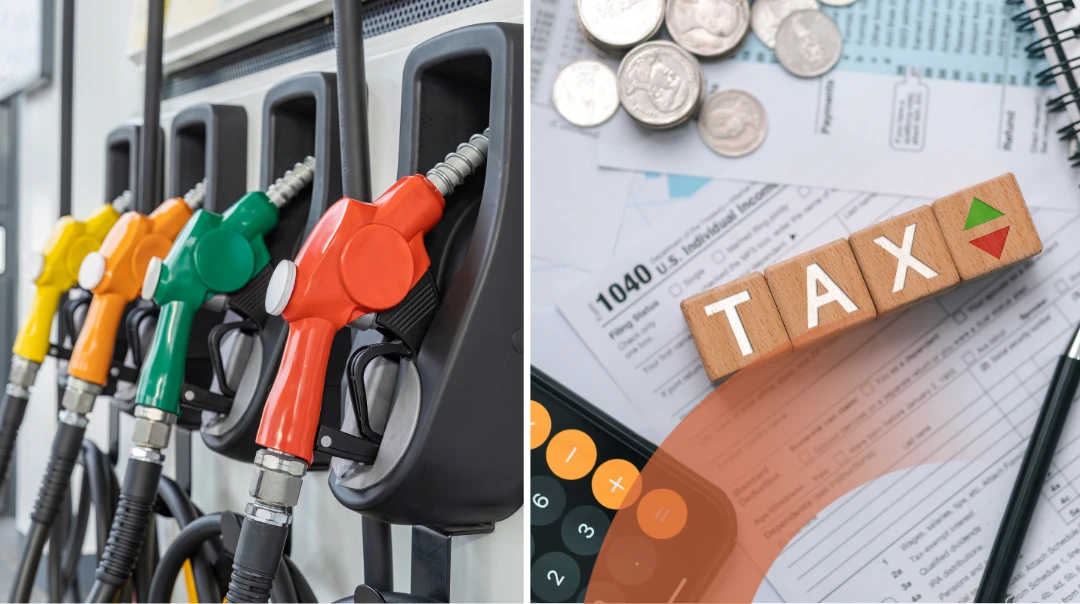
Pulling into the servo lately feels like a minor financial crisis. With petrol prices constantly fluctuating and pushing toward new highs, every driver on the road is feeling the pinch. Naturally, as we get closer to tax time, the most common question we hear at the firm is whether the Australian Taxation Office will help foot the bill for the daily drive.
The baseline rule is brutal but clear. The standard trip between your home and your regular place of work is a private expense. Trying to claim your morning commute just because public transport is unavailable will trigger an immediate red flag in the ATO system.
However, there are several strict exceptions to this rule, and the specific details are where many people leave legitimate money on the table.
Take the rule for tradespeople carrying bulky tools. Many workers know they can claim their commute if they are forced to transport heavy equipment. What they do not realise is the ATO specifically looks for a "secure storage" trap. If your employer provides a secure locker or lockup box at the worksite, but you simply prefer to take your tools home for convenience, your claim is instantly invalid. You can only claim the travel if there is genuinely no safe place to leave your equipment at work.
Another major exception is for itinerant workers. If your job requires you to shift constantly between multiple different work sites on the same day without a fixed office, your home effectively becomes your base of operations. In this specific scenario, the trip from your driveway to your first site, and the trip home from your last site, becomes completely tax deductible.
When it comes to calculating these valid work journeys, the ATO allows you to use the cents per kilometre method, capped at 5,000 kilometres per vehicle. What is rarely mentioned is how this interacts with joint ownership. If a car is jointly owned by a couple, the 5,000 kilometre cap applies per person, not per vehicle. A husband and wife who both legitimately use the exact same family car for their respective jobs can claim up to 5,000 kilometres each, essentially doubling the allowable threshold for the household without needing a complex logbook.
If you drive heavily for work, the logbook method is absolutely the smarter financial move. A compliant logbook requires you to track every single trip for twelve continuous weeks and is valid for five years. But there is a massive administrative catch. Even if your logbook is valid and you are in year three of the cycle, you are still legally required to record the opening and closing odometer readings on your dashboard at the exact start and end of every financial year. Forgetting to record your odometer reading on June 30 can completely invalidate your entire claim.
Finally, for salary earners looking at novated leases to beat the petrol crisis, the landscape has fundamentally shifted. While fully electric vehicles still enjoy massive Fringe Benefits Tax exemptions, the legislative sunset clause for Plug-in Hybrid Electric Vehicles came into effect on April 1, 2025. If you are signing a new lease for a hybrid vehicle today, you will not receive the same massive tax breaks you would have received a few years ago.
The 2026 End of Financial Year is approaching fast, and the ATO has drastically improved its data matching technology regarding vehicle claims. If you are unsure whether your driving habits qualify for a deduction, or if you still have an overdue 2025 tax return sitting in the too-hard basket, it is time to get it sorted. Reach out to the team at Trident Accounting, and we can sit down to ensure you are claiming exactly what you are legally entitled to.