
Victoria’s Auction Shake-Up Has Buyers Talking. Should NSW Follow With Its Own Underquoting Crackdown?
Local & Community
Property & Investing
Sutherland Shire
Cost of Living
Opinion
Real Estate
Government
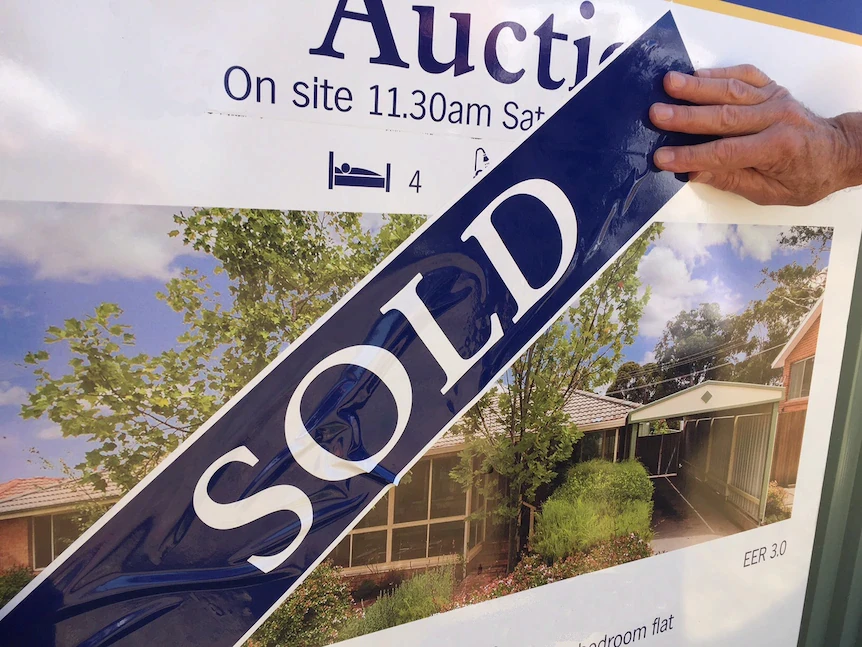
NSW’s growing frustration with auction transparency
Anyone trying to buy a home in Sydney has felt the shift. Guides that once provided a rough anchor now feel more like bait. Families in Miranda and Southern Sydney tell the same story: they research carefully, attend inspections, pay for due diligence and line up at auctions that seem within reach, only to watch the bidding leap far beyond the marketing range in a matter of minutes. The emotional toll is real, and the financial waste adds up quickly.
An ABC News investigation in November 2025 captured this pattern in a single Saturday across Sydney’s west and inner west. In Punchbowl, a home sold for 31 per cent above its online guide. In Burwood, a multi-million-dollar property cleared the guide by 28 per cent. In Belmore, a five-bedroom house went 15 per cent above the guide but still did not sell because the vendor required more. These are not outliers. They are part of a broader mismatch between the public guide and the vendor’s true expectations.
Underquoting is not new, and NSW law already prohibits it. Agents are not allowed to advertise a figure below the estimated selling price they have agreed with the vendor. Yet the gap between guides and sale prices remains wide. The difficulty lies in proof. Vendor expectations can shift, comparable sales can be selected selectively and agents can argue that demand simply exceeded forecasts. The result is a system where the guide feels more like an entry point than a meaningful indicator.
Homer, formerly KoalaData, tracks the pricing path of properties nationwide. According to the ABC report, more than 220 agents across Australia in 2023 had average guides more than ten per cent under the eventual sale price, with almost sixty per cent of those cases occurring in NSW. That concentration is telling. It suggests that the problem is not only behavioural but structural, embedded in the way NSW auctions are marketed and conducted.
For buyers in suburbs like Caringbah, Miranda and the inner west, the consequence is wasted time, repeated building and pest inspections, and the slow erosion of confidence. Many families adjust their borrowing expectations simply to remain competitive, which can push them into riskier financial territory than they originally intended. In a state where household debt is already elevated, this is an outcome regulators cannot comfortably ignore.
What Victoria changed, and why it matters
Victoria’s reforms, introduced in late 2024 and implemented through 2025, have created pressure across the border. The centrepiece of the reform is simple: the auction reserve must be published at least seven days before the auction. Without that disclosure, the auction cannot proceed.
The policy does not eliminate every uncertainty, but it closes several of the gaps that NSW buyers currently face. Publishing the reserve early prevents last-minute reserve increases that catch bidders off guard. It also forces a more disciplined alignment between the campaign guide and the vendor’s minimum acceptable price. Consumer Affairs Victoria has indicated that once the reserve is published, significant changes require restarting the countdown, which adds delays that sellers generally want to avoid.
There is still room for tactical behaviour. Victorian regulators acknowledge that the vendor retains the discretion not to declare the property “on the market” even when bidding reaches the reserve. The auctioneer can withdraw the listing until the moment the hammer falls. That nuance stops the reform from being a complete guarantee of transparency, but it still creates a clearer reference point for buyers, particularly those reluctant to spend on inspections when the true price sits far above the guide.
The psychological impact has also been significant. When buyers know the published reserve, they can decide early whether the auction aligns with their finances. It reduces the crowd of bidders standing in the wrong postcode. It also helps separate genuine competition from artificial momentum. In markets where confidence matters as much as pricing, reducing ambiguity can steady behaviours on both sides.
Victoria’s approach mirrors a wider theme seen in RBA communications over the past few years: markets function better when information gaps are small. The Bank’s 2023 annual report emphasised that transparency and consistent communication anchor expectations and reduce distortions. While that discussion related to monetary policy rather than property law, the underlying logic applies neatly here. Clear rules create a more stable environment for household decision-making.
Whether NSW will follow Victoria’s lead
NSW has publicly acknowledged the problem. The Fair Trading Minister said in 2025 that stronger underquoting laws are needed, and the state has allocated $8.4 million to a taskforce targeting misleading sales practices. Those signals matter. They suggest the government understands how far removed the current regime is from public expectations.
But NSW has not yet committed to reserve-price publication. The state’s legislation continues to focus on estimated selling prices and comparable sales, leaving agents room to justify guides that may not reflect the vendor’s actual position. As long as reserve prices can shift during a campaign, and as long as guides can be justified through broad interpretation, the enforcement challenge remains high.
The next move will likely depend on how Victoria’s reforms play out over the coming year. If reserve publication stabilises buyer behaviour and reduces disputes over campaign accuracy, NSW will face greater pressure to adopt a similar model. In a highly mobile housing market, where many families relocate between Melbourne and Sydney, inconsistencies between states become more visible. Buyers quickly learn that one jurisdiction offers clearer information than the other.
There is also the political reality that auction frustration is no longer confined to inner-city professionals. Families across Southern Sydney, tradespeople upgrading to larger homes and small-business owners looking to secure long-term stability are all encountering the same pattern. When the impact is broad, the case for reform becomes harder to resist.
A future NSW model could mirror Victoria closely or go further. One option would be requiring immediate guide updates when buyer interest significantly exceeds expectations. Another would be increasing penalties so they scale with the transaction size, which would make enforcement meaningful in a market where a single sale often exceeds two million dollars. A third option would be requiring clearer disclosure of comparable sales, narrowing the ability to select outliers to justify low guides. None of these changes would eliminate market volatility, but they would reduce the gulf between marketing and reality.
What buyers can take from the current environment
Even without reform, buyers can reduce some of the uncertainty by recognising the patterns shown in recent reporting. The ABC investigation demonstrated how easily auctions can exceed guides. Homer’s data highlighted the frequency with which NSW guides sit more than ten per cent under final sale prices. These are signals worth integrating into planning.
For many households, one practical step is widening the buffer between the guide and the budget. Some buyers now treat the guide as a minimum starting point rather than a midpoint. Others use auction-free periods, such as holiday months, to conduct research when competition is lower. The principles are the same ones outlined in Moneysmart’s guidance on managing money: understand your time frame, be clear about your risk tolerance and keep records that help guide long-term decisions.
If NSW adopts a Victorian-style reserve publication rule, the buying experience will look different. It will not erase disappointment, and it will not fix affordability, but it will tighten the link between the guide and the true price. Buyers will have clearer signals about whether to pursue a property. Sellers will have earlier-stage discipline about their expectations. Agents will face stronger guardrails around how guides are constructed. A small structural change can set off a meaningful shift in behaviour.
The broader impact is financial clarity. When buyers can focus their inspections and due diligence on properties that sit close to their actual budget, the emotional load lightens and the risk of over-extension reduces. Families in Miranda or Sutherland who already face a substantial mortgage burden do not need the added pressure of chasing auctions that were never in range. Transparency does not change the market, but it changes how people interact with it.
The property market sits at the intersection of emotion, finance and regulation. When those pieces misalign, confidence suffers. NSW is reaching a point where the public’s lived experience is no longer compatible with the legal framework that governs guides and reserves. Victoria has demonstrated that clearer rules are possible. The question now is how long NSW will wait before matching them.
If you are planning to buy in the next year and want help modelling your borrowing range, understanding your risk position or planning for a volatile auction environment, Trident Accounting can help you make decisions with more confidence and less guesswork. A structured approach to affordability can make the difference between a stressful campaign and a manageable one.
Written by Aidan Walmsley